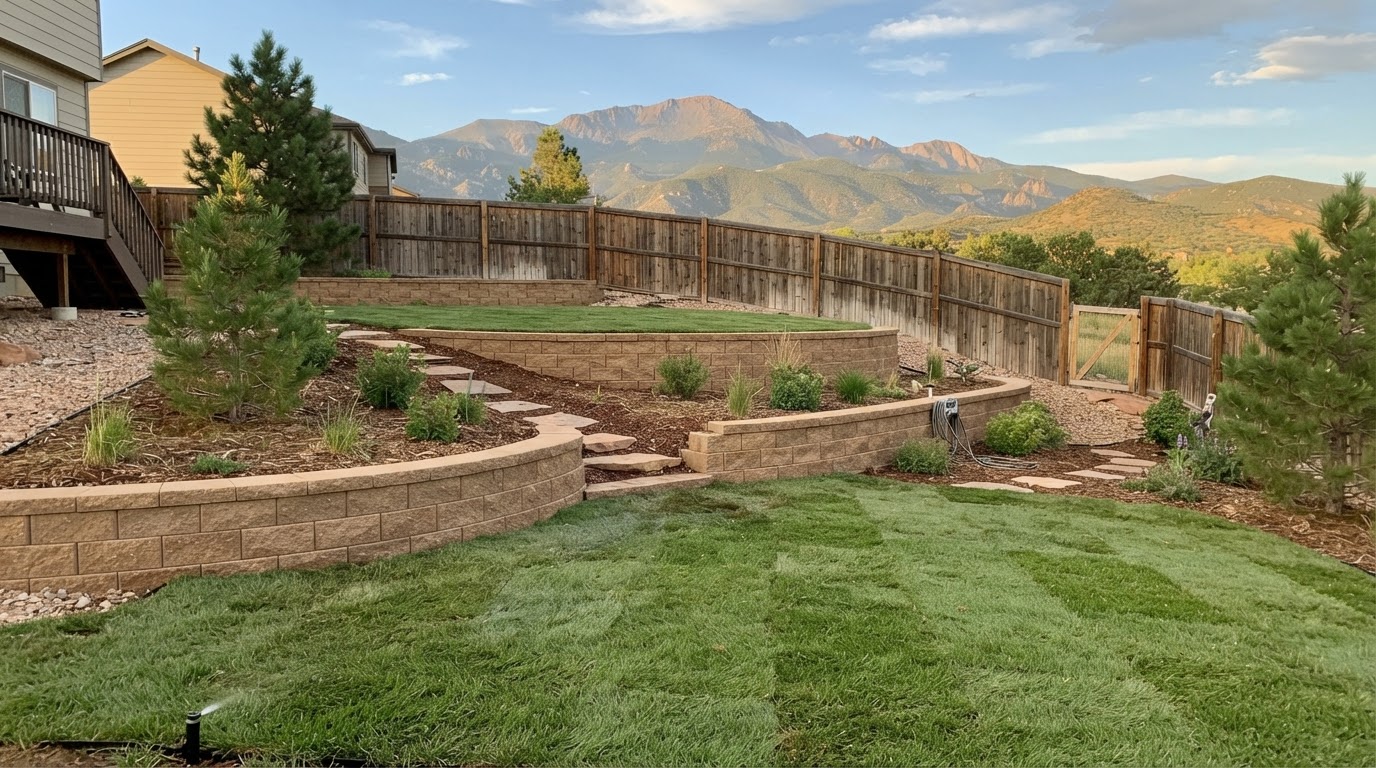
Retaining Wall Installation in Colorado Springs
Retaining wall installation is the process of planning, preparing, and building a new wall that holds back soil on a sloped residential lot. In Colorado Springs, where foothill properties and sloped yards are common, a well-built retaining wall turns an awkward grade into usable, level outdoor space. Every installation starts with understanding the slope, the soil, and how water moves across the property, then selecting a material and foundation approach suited to the wall's height and the look you want.
Retaining Wall Installation
New retaining walls built to manage slopes, create level yard space, and frame residential landscapes.
Retaining wall installation is the process of planning, preparing, and building a new wall that holds back soil on a sloped residential lot. In Colorado Springs, where foothill properties and sloped yards are common, a well-built retaining wall turns an awkward grade into usable, level outdoor space. Every installation starts with understanding the slope, the soil, and how water moves across the property, then selecting a material and foundation approach suited to the wall's height and the look you want.
Common Applications
- Leveling a sloped front or back yard into usable lawn or garden space
- Creating terraced planting beds on a hillside
- Framing a patio, walkway, or driveway on uneven ground
- Holding back soil along a property edge or slope
Materials & Construction Considerations
- Wall height and length determine whether engineering and permits are needed
- Base preparation and compaction are the foundation of a wall that lasts
- Drainage behind the wall prevents the water pressure that causes leaning
- Material choice should match the slope, soil, and desired aesthetic
Retaining Wall Installation — Common Questions
How tall can a residential retaining wall be?+
Lower walls are typically straightforward, while taller walls commonly require engineering and permits. The right height depends on your slope, soil, and local requirements—we recommend confirming with the City of Colorado Springs building department.
What is the first step in installing a retaining wall?+
A site assessment. We look at the slope, soil, drainage, and how you want to use the space, then recommend a material and approach that fits the conditions.
Discuss your retaining wall installation project
Tell us about your property and we'll help you weigh the options for your slope and soil.