Timber Retaining Walls in Colorado Springs
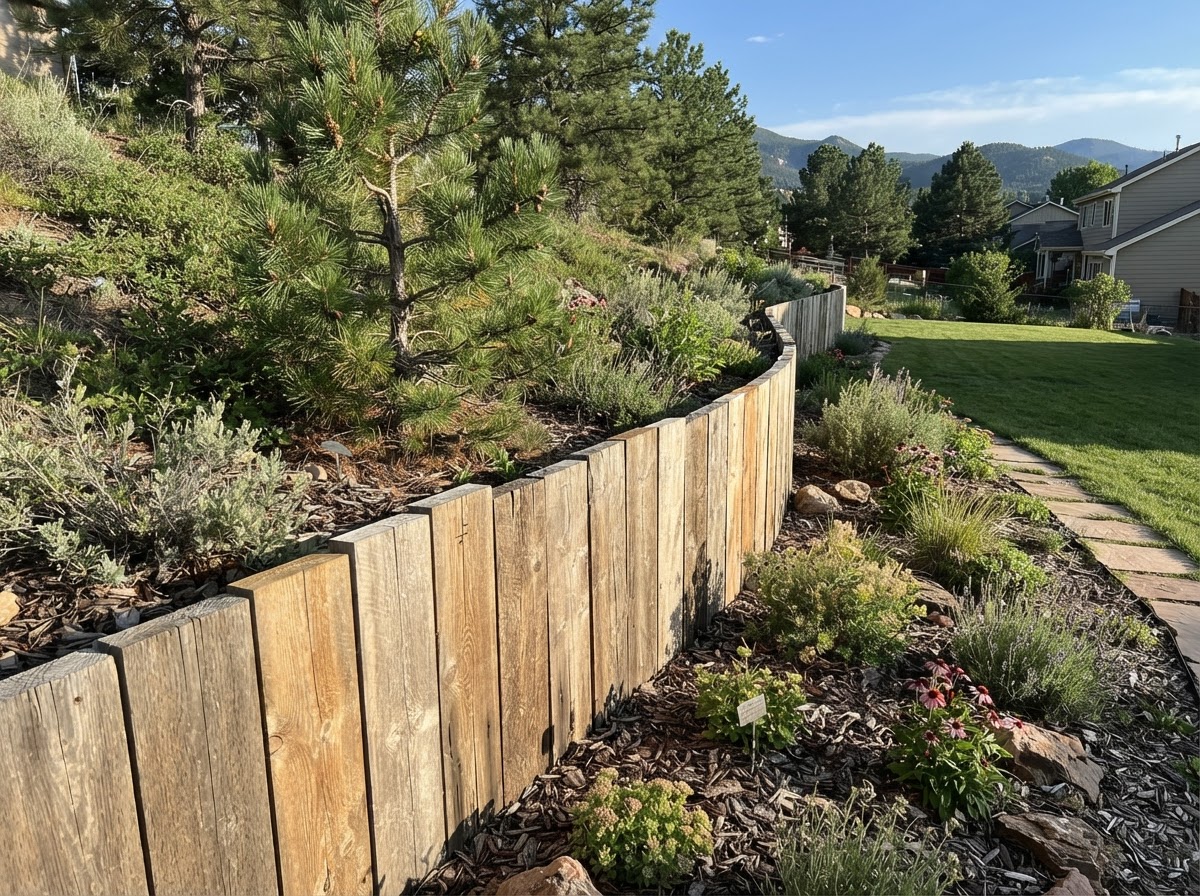
Timber retaining walls use pressure-treated wood planks or logs to hold back soil at lower heights. Wood brings a warm, natural tone to a landscape and works especially well for garden edges, low slope borders, and residential yard transitions. Timber is a practical choice for lower walls where its natural appearance and straightforward construction suit the setting.
Timber Retaining Walls
Warm, natural wood retaining walls for lower heights, garden edges, and residential landscape borders.
Timber retaining walls use pressure-treated wood planks or logs to hold back soil at lower heights. Wood brings a warm, natural tone to a landscape and works especially well for garden edges, low slope borders, and residential yard transitions. Timber is a practical choice for lower walls where its natural appearance and straightforward construction suit the setting.
Common Applications
- Low garden retaining walls and planting bed edges
- Residential yard transitions and slope borders
- Landscape edging along lawns and pathways
- Warm, natural-looking accents in wooded settings
Materials & Construction Considerations
- Timber is best suited to lower wall heights
- Pressure-treated wood resists rot and weather for residential use
- Drainage behind the wall extends the wood's lifespan
- Wood has a shorter lifespan than stone or concrete
Timber Retaining Walls — Common Questions
How long do timber retaining walls last?+
Pressure-treated timber walls typically last shorter than stone or concrete, but with proper drainage and upkeep they provide years of service. They are best for lower heights where replacement is less involved.
Are timber walls good for tall retaining walls?+
Timber is best suited to lower walls. For taller retaining walls, concrete block or stone are generally more durable and easier to engineer for the load.
Related Services
Discuss your timber retaining walls project
Tell us about your property and we'll help you weigh the options for your slope and soil.